Hiring for substantial remodeling · Los Angeles area
Remodel Warranty Review: Compare Labor, Products and Service Calls
Before signing a remodeling agreement, compare the written workmanship warranty, each important product warranty, and the terms for diagnosis and replacement labor. The useful question is what happens when a specific item needs attention: who receives the report, what is covered, and which charges or responsibilities still need an answer.
Explore this guide
Request the documents before comparing the promises
A warranty discussion is useful before hiring because it exposes responsibilities that a scope and price may leave unclear. Ask for the proposed agreement, any separate workmanship warranty, the important product warranties and the written service-call or reporting terms that will apply to the project. Read the documents together. A confident verbal answer should lead to identifiable wording in the agreement or an attached document.
The Contractors State License Board’s Home Improvement Contracts consumer guide advises obtaining offered labor and material warranties in writing, identifying the work covered and the duration, and requesting manufacturer warranties. That is a practical starting point for comparison. It does not supply a universal workmanship period for every California remodeling project, and it does not establish any particular contractor’s terms.
Make a document list with the issuer, title, version or date, covered product or work, and its place in the proposed agreement. If the salesperson refers to a separate warranty, request that actual document. If a product has not been selected, mark its warranty information as pending. A brochure for a similar product or a general brand slogan should not be treated as the final terms for a different model.
Keep the comparison within its purpose. This review asks what written coverage is offered and how a reported problem would be handled. It does not replace checking the contractor’s qualifications, reviewing the complete agreement or inspecting completed work. For a substantial renovation, connect the coverage questions to the scope developed through whole-home renovation planning, so that important installations and retained items are recognizable in the documents.
A useful outcome is not simply “warranty included.” It is a coverage card you can read back: this issuer covers this work or product under these stated conditions; this event starts the stated period; this contact receives reports; these documents are needed; these costs remain covered, excluded or unanswered. Leave unanswered fields visibly open while there is still an opportunity to clarify the proposed agreement.
Separate workmanship, product coverage and service labor
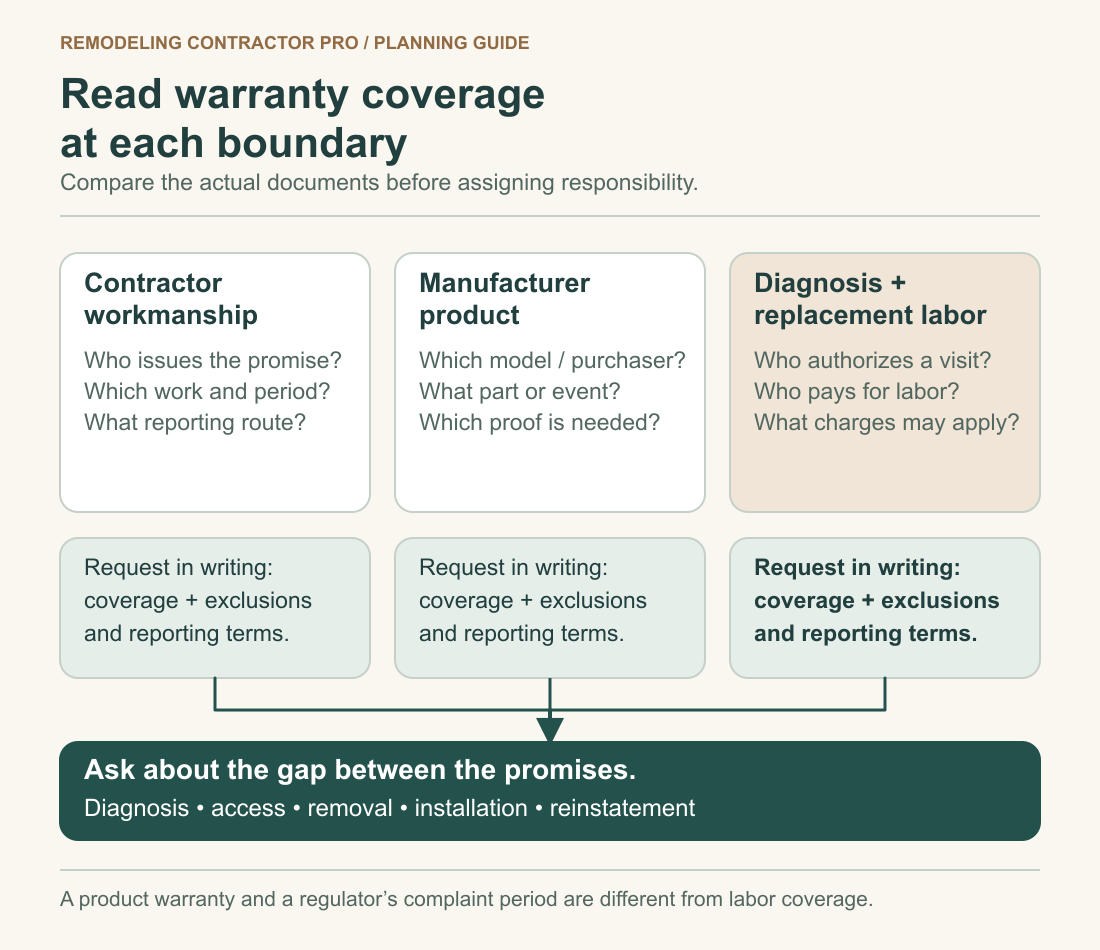
Contractor workmanship promises and manufacturer product warranties can address different things. CSLB’s consumer guidance distinguishes offered labor and material coverage from manufacturer warranties. Do not merge the documents into a single promise merely because the product will be installed as part of the remodel. A covered replacement part and the work needed to replace it can be separate questions.
Start with the workmanship document. Identify the work described, its boundaries and any stated exclusions. Does it refer to the contracted work generally or to named installations? Does it distinguish new work from retained construction? Ask for clarification where the scope is ambiguous, without assuming that an omission grants or removes coverage. The answer should come from the issuer and the applicable agreement.
Next, identify the product document. Match the actual manufacturer, model or product line, purchaser and intended application. A warranty for one category of products may not govern another item sold under the same brand. Save the applicable version supplied for the project, and ask how a later substitution would be reviewed. The brand name alone is too broad a record.
Then trace the service work around the product: diagnosis, obtaining the replacement, travel or service calls, removal, installation, access through surrounding finishes and restoring the affected area. Do not assume each step is excluded or included. Make it a question for the documents. This third layer is where a homeowner can discover that two reassuring coverage statements leave an unresolved practical gap.
A limited manufacturer example shows why. The Delta faucet warranty’s “What Is Not Covered” section excludes purchaser labor charges for removal, installation, repair or replacement. This example concerns that faucet warranty and its applicability conditions; it is not a statement about all Delta products, other manufacturers or Remodeling Contractor Pro. Its value here is the question it prompts: where does the proposed project agreement address the labor around a product claim?

Compare the wording without turning it into a brand recommendation. A lengthy product warranty may still leave labor questions unanswered. A more detailed service arrangement may address responsibilities that a headline warranty phrase does not explain. Ask which document governs each step and keep the actual response, including any limits or conditions, with the comparison.
Build a before-signing coverage card
Use one card for each significant work or product category rather than one crowded note for the entire remodel. A fixture, an installed finish and a piece of equipment may have different documents and reporting requirements. The original format below helps locate the gaps. It does not determine legal coverage or establish a required contractual term.
| Field | What to request | What should remain visible |
|---|---|---|
| Issuer and document | Actual company or manufacturer, document title and applicable version. | Any referenced document that has not been supplied. |
| Covered work or item | Scope description and exact product identity where relevant. | Retained work, adjoining finishes or substitutions needing clarification. |
| Start event and duration | Wording stating when coverage begins and how long it is offered. | Unclear event, different product dates or an unanswered expiry question. |
| Diagnosis and labor | Service-call, examination, removal and reinstallation terms. | Who authorizes work and who may be charged under stated conditions. |
| Access and restoration | How access through surrounding construction is addressed. | Any unclear boundary between a covered item and surrounding work. |
| Owner duties and exclusions | Actual care, use and reporting provisions. | Instructions missing or incompatible with the proposed use. |
| Reporting route | Recipient, method and information requested. | Responsibility when more than one issuer is involved. |
| Document retained | Copy attached or clearly identified in the project record. | Verbal statements still awaiting written clarification. |
Quote the short operative wording in your private card where that helps accuracy, and point to the document section. Keep the full document as well. A summary can lose qualifications, so the card should help you find the source rather than become a replacement for it. Where two documents appear inconsistent, ask the relevant issuer to explain how they relate before treating either interpretation as settled.
For dates, record the stated start event first. Do not automatically use contract signing, delivery, installation or project completion interchangeably. Ask which event the actual document specifies and what record will establish it. If a product has not been selected, do not calculate its coverage expiry from an assumed rule. The unresolved field is a reminder to obtain the correct document.
Keep the proposed agreement version tied to the card. A revised scope, product substitution or changed service term can make an earlier answer incomplete. Ask for the revised written wording and update the corresponding row. This is especially important when one person explains the warranty but a different document arrives for signature.
Ask what happens before anyone knows the cause
A reported symptom does not necessarily identify whether the issue concerns a product, installation, retained construction or another condition. Before signing, ask how the proposed service arrangement handles that uncertainty. Who receives the report? Who decides what examination is needed? Who authorizes a visit or further work? Which charges may apply, and under what written terms?
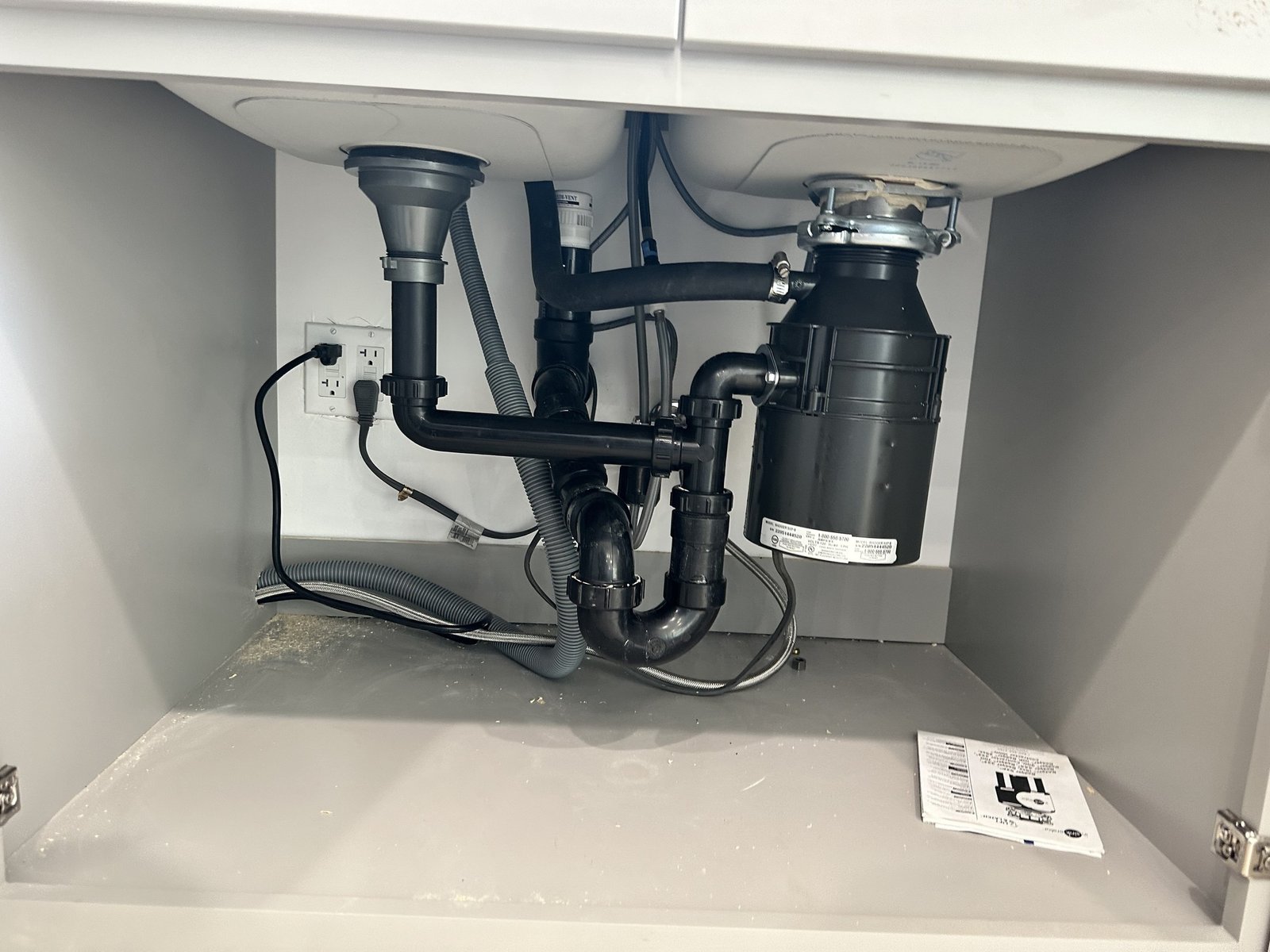
Separate arranging diagnosis from assigning responsibility. You can ask who coordinates the initial response without asking that person to promise a result before examination. Likewise, a manufacturer may need product information before evaluating a claim. A clear reporting route helps the homeowner avoid sending an incomplete report to several parties and assuming that someone else has taken responsibility.
Include access in the discussion. An item may be visible while part of its installation is concealed. Ask how the agreement addresses access and restoration if examination or replacement requires work around it. Do not assume the product issuer pays for the surrounding construction. Do not assume the contractor’s written coverage excludes it either. Record the actual answer and the provision supporting it.
Ask about authorization before a service call becomes additional work. The question is practical: what will the homeowner be told before chargeable diagnosis, removal or restoration proceeds? You are seeking the proposed arrangement’s written terms, not inventing a universal fee or response requirement. If no terms have been supplied, mark the item unresolved rather than inserting a number from another project.
For a substantial remodel with several trades, identify the reporting contact the agreement actually provides. A subcontractor’s involvement does not tell the homeowner which party should receive a report. Ask how product and installation questions will be coordinated, especially when the cause is uncertain. Preserve the distinction between a contact who routes information and a party whose document offers coverage.
Follow a hypothetical fixture problem through the questions
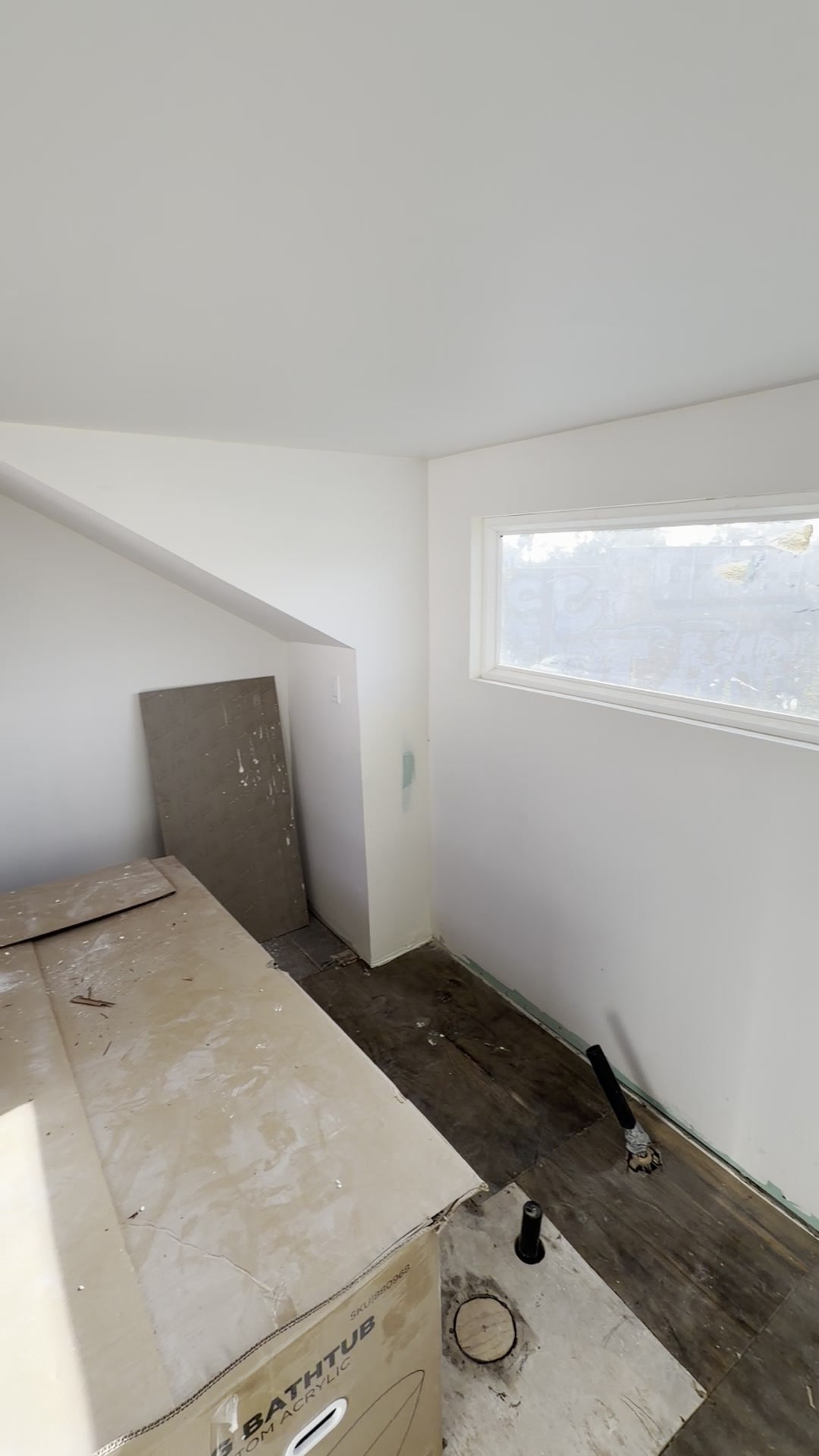
Imagine an installed faucet begins dripping after a remodel. This hypothetical example illustrates a reporting question; it makes no diagnosis or finding about coverage. Before anyone concludes what failed, the homeowner can record when the symptom was noticed, what happens during ordinary use, the item’s identity and relevant photographs. The pre-contract question is whether the proposed documents explain where that report goes and what happens next.
Step one is identity. Can the owner locate the exact model and applicable warranty document? Who purchased it, and where is the purchase record? A photograph of a faucet may help locate it, but it does not establish the model or warranty conditions. Ask before signing how those records will be assembled for the selected items, especially when the owner and contractor are supplying different products.
The Delta faucet warranty’s claim instructions, as a limited example, request model and purchase information and describe proof-of-purchase requirements with stated alternatives. Do not translate that example into a claim that every brand requires registration or identical documents. Instead, use each actual selected product’s instructions to build its record.
Step two is reporting. The owner follows the route in the relevant project documents, providing the symptoms and item information without declaring a cause. Before signing, ask whether the proposed arrangement identifies a first contact and how it handles a question that could involve both product and installation. A report can be specific and useful without assigning blame.
Step three is diagnosis and authorization. Ask what the written terms say about an examination, a service visit and any additional access needed. If a replacement component is available under a product warranty, ask where removal and reinstallation labor are addressed. The existence of a part remedy does not answer every surrounding service question.
Step four is the boundary revealed by the finding. A qualified assessment might identify an issue involving the product, installation or another condition; the example does not predict which. The owner should then be able to locate the documents relevant to that finding. A pre-contract review cannot guarantee agreement later, but it can reveal whether the proposed terms address the process at all.
Write the unresolved question in neutral language: “Please identify the terms governing diagnosis and labor if this installed item needs a product replacement.” That question is more useful than “Everything is covered, correct?” It invites a document-based answer and makes any remaining gap easier to see before the agreement is signed.
Compare owner-supplied and contractor-supplied items carefully
When the owner purchases an item, separate product coverage from the installation work promised in the agreement. Ask who is the purchaser under the product terms, who keeps the receipt and who can make a claim. Then ask how the contractor’s offered workmanship coverage addresses installation of that item. Do not assume an owner purchase removes all coverage or includes every replacement expense.
Use the same questions for a contractor-supplied item. Confirm how the owner will receive model information and applicable documents, and whether the product terms depend on purchaser or use conditions. “The contractor bought it” does not by itself answer those questions. The comparison should identify the document and the actual arrangement for the installed product.
Consider a second hypothetical project in which the owner supplies a decorative fixture while the contractor supplies a different installed fixture. Put the two items on separate coverage cards. The owner-supplied card may have a readily available receipt but an unanswered labor boundary. The contractor-supplied card may have a stated installation promise but missing product paperwork. Neither card should be called complete simply because the other one is better documented.
Ask about a product substitution before accepting it. The replacement may have different terms, care instructions or claim requirements. Update the card with the actual item rather than leaving the warranty for the original selection attached. This article does not prescribe who should buy the products; it asks whether the chosen supply arrangement leaves the coverage record understandable.
If future transfer matters to you, request the actual transfer conditions. Do not assume that a coverage statement follows the property, the item or a future owner. Ask the issuer to point to the relevant wording. If the answer requires interpretation of legal rights or contractual enforceability, obtain qualified advice on the actual documents.
Read care duties and exclusions as part of selection
Care and use conditions belong in the review before products are finalized. The Delta faucet example includes exclusions related to matters such as improper installation, maintenance, misuse and wear. That example does not determine coverage for a particular future problem. It illustrates why a homeowner needs the actual conditions, rather than relying on the headline duration alone.
For each significant finish or product, ask for its care instructions alongside its coverage document. Identify duties the household does not understand or may not be prepared to carry out. A product preference and a maintenance commitment should be considered together. Ask for clarification from the appropriate issuer; do not invent a cleaning method or service interval to fill a missing instruction.
A hypothetical finish selection illustrates the decision. One household wants a particular appearance but has not reviewed the care document. Before signing, it can compare keeping that choice with accepting its actual care requirements, or selecting a different documented product. The comparison is about informed preference. It does not assume one material is universally easier to maintain or that a future mark would be covered.
Read exclusions for scope as well as detail. Ask what retained materials, existing conditions or surrounding work the offered document discusses. If the remodel joins new and existing work, clarify that interface using the actual scope drawing or description. “Existing work excluded” may still require an explanation of where the proposed work begins and ends; do not decide its meaning from a slogan.
Save clarifications with the relevant card and ask for revised wording where the proposed agreement needs it. Keep statements attributed to their source. An installer’s comment about a product manufacturer’s terms should lead back to the manufacturer document or a direct clarification, rather than being recorded as an expanded manufacturer promise.
Compare complete coverage descriptions, not headline lengths
Put the proposed documents side by side by topic. Start with scope, then the start event and duration, then diagnosis, labor, access, exclusions and reporting. A longer stated period is only one element of the comparison. Without knowing what work it covers and what the owner must do, the number cannot answer the practical service question.
Consider two hypothetical proposals with different levels of detail, without assigning invented terms to a real contractor. Proposal A supplies a short warranty statement but does not identify replacement labor or reporting requirements. Proposal B provides more detail about those topics but leaves product documents pending. The useful conclusion is that each has a different unanswered item. Neither is automatically better until the actual offered coverage can be understood.
Request the missing information in a short written list. Identify the item, quote or reference the document section, ask the specific question and record the response. For example: “The product document discusses replacement parts; which proposed contract term addresses removal and reinstallation?” Or: “Which event starts the workmanship period stated in this attachment?” A precise request is easier to answer than a broad demand for a stronger warranty.
Keep payment terms separate from coverage. The existing guide to California contractor payment schedules addresses that different decision. A payment provision does not explain the entire warranty arrangement. This review does not recommend withholding payment, change final-payment timing or determine the owner’s remedies.
Also keep offered warranty terms distinct from separate legal rights and agency jurisdiction. CSLB’s complaint information describes its role; it should not be read as a product or workmanship warranty. This guide supplies no legal deadline, waiver interpretation or exclusive-remedy conclusion. For a material legal question, have a qualified California attorney review the actual agreement and circumstances.
Before signing, mark the card as answered, clarified in revised wording, or still unresolved. Do not use “reviewed” to mean that a document was merely received. The decision is whether you understand the offered terms well enough to proceed, with appropriate professional advice where needed. Preserve the final version that supports that decision.
Try a reporting dry run before signing
Use a hypothetical symptom to test whether the paperwork is understandable, without treating the exercise as an actual claim. Choose one installed item from the proposed scope. Imagine that it stops performing as expected and that the cause is unknown. Using only the documents supplied, find the issuer, the reporting route, the information requested and the terms addressing an initial examination. Any step you cannot explain becomes a specific pre-contract question.
The exercise should work without the person who presented the proposal standing beside you. A household member who did not attend the sales discussion can try locating the relevant information. If that person finds a product brochure but no applicable warranty, the document list needs attention. If they find the warranty but cannot identify the installed model, the project record needs a clear way to connect the item with its documents.
Now add an uncertainty: the reported symptom could involve the product or its installation. Do the documents identify whom to contact first and how the question is routed? Do they explain any stated diagnosis charge or authorization step? Do they identify where replacement labor is addressed? The aim is not to force an answer about a failure that has not happened. It is to see whether the proposed arrangement has an intelligible path.
Repeat the exercise for an installed finish where access to surrounding work could matter. Find the workmanship description, relevant care document and any provision discussing access or restoration. If the wording is unclear, preserve the question in the card and request clarification. Do not convert the absence of an answer into either a coverage promise or a denial.
Finally, check the handoff between documents. A manufacturer’s instructions might direct the purchaser to provide records, while the proposed project arrangement identifies a contractor contact for service questions. Ask how those steps will be coordinated for the actual item. Record who supplies the information and where it will be kept. This small exercise can reveal an organizational gap even when each individual document is readable.
Keep the dry-run result short: the item used, the documents located, the path you could follow and the question still unanswered. Attach the response or revised wording when it arrives. That produces a useful review record without predicting a dispute, diagnosing a hypothetical defect or suggesting that any particular outcome is guaranteed.
Keep the answers attached to the proposed agreement
The Remodel warranty document comparison provides twenty fields for the project and contract version, issuer, workmanship description, start event and duration, product documents, supply responsibility, replacement labor and service-call terms. It also includes owner duties, exclusions, reporting information, unresolved legal questions and the copies to retain. Use it to organize document requests before the agreement is signed.
The worksheet creates a notes summary, clears the fields and supports browser printing. It does not calculate coverage periods, autosave entries, submit a claim or send information to a contractor. Keep a copy before closing or reloading it. A completed field is your record of an answer or question; the tool does not confirm coverage or interpret the contract.
Retain the final agreement, offered warranty attachments, applicable product documents and the written clarifications together. Keep model and purchase information easy to find, with the reporting route associated with the correct issuer. That organization supports a more specific conversation if an issue arises, while preserving what was actually offered rather than what someone remembers hearing.
For a substantial project in Los Angeles and within the stated 50-mile service radius, contact Remodeling Contractor Pro about the property and proposed scope and request the current documents applicable to that proposal. Confirm service availability for the address.
REMODELING CONTRACTOR PRO · OWNER PLANNING
Remodel warranty document comparison
Record the actual property, proposed work and the decisions you need to resolve. Keep the source of an answer, the responsible person and the next action beside your notes. Leave an unknown item visibly unresolved.
This worksheet does not submit or save entries automatically. Use View entered notes to select and copy a summary, or Print / save as PDF through your browser before closing or reloading. It does not calculate costs, design construction or determine approvals. Keep a separate saved copy for each option you compare.
Your entered notes